


Leveraging Advanced Hand Therapy Expertise for the Neurologic Upper Limb
Written by: Mirella Deisher, OTD, MS, OTR/L, CHT
Virtual Hand to Shoulder Fellowship, LLC
Founder & Faculty

Advanced hand therapy expertise reflects refined clinical reasoning across the upper limb, from shoulder girdle mechanics through hand function. When applied to neurologic upper-limb rehabilitation, this expertise strengthens the clinician’s ability to anticipate secondary orthopedic sequelae, preserve recovery potential, and reduce long-term constraints on movement.
Our growing understanding of neuroplasticity, and how to leverage it therapeutically, has increasingly influenced upper-limb rehabilitation across orthopedic and neurologic conditions. This convergence underscores the value of a shared, integrated skill set when treating the upper limb.
In neurorehabilitation, task-based training, motor learning, and functional participation are essential components of care. Yet neural recovery must be expressed through a mechanical and sensory system that adapts over time. When this system is not managed with equal rigor, predictable orthopedic and sensory sequelae evolve and progressively constrain movement across the course of recovery.
Altered neural control changes how joints are positioned, how tissues are loaded, and how sensory input is processed. Over time, these changes contribute to adaptive shortening, capsular restriction, altered joint mechanics, and peripheral nerve compromise. If left unaddressed, these constraints can become dominant movement drivers and substantially narrow the options for efficient movement and functional use, even while the nervous system remains capable of experience-dependent reorganization.
Importantly, these orthopedic changes do not exist independently of the nervous system. As movement options become mechanically constrained, compensatory strategies are reinforced cortically, and sensory input may become distorted. Neuroplastic change continues, but within an increasingly restricted system.

In orthopedic rehabilitation, clinical reasoning is inherently multifactorial and phase-informed. Intervention is guided by protection of healing tissues, followed by targeted remediation of impairments that include mobility, strength, joint mechanics, and sensory-motor control. This is then integrated progressively into functional performance. This approach is routinely delivered within a whole-person, biopsychosocial framework that considers pain, threat, confidence, and behavior alongside tissue and movement.
In neurologic upper-limb rehabilitation, clinical reasoning is shaped primarily by central recovery dynamics, and also within a whole-person, biopsychosocial framework. However, because many secondary musculoskeletal constraints develop gradually and may be less salient in the early phases of care, bottom-up orthopedic and sensory-motor reasoning is not always integrated with the same depth and intent. Over time, these evolving constraints can compound the primary neurologic impairments and increasingly shape movement options. In this population, impairment-level remediation is not separate from function. It preserves recovery potential by expanding the movement options available to the nervous system and reducing compounding adaptations that constrain long-term outcomes.
Patients post-stroke, for example, must reconnect with their bodies. Rehabilitation must support awareness of where the limb is in space, how movement feels, and what efficient movement looks like. Without this attentional and sensory retraining, movement can default to efficiency-driven compensation rather than restoration.
The orthopedic consequences of neurologic injury are not limited to the affected limb. Increased reliance on the contralateral upper limb introduces predictable overuse risks that also warrant anticipatory recognition and prevention.
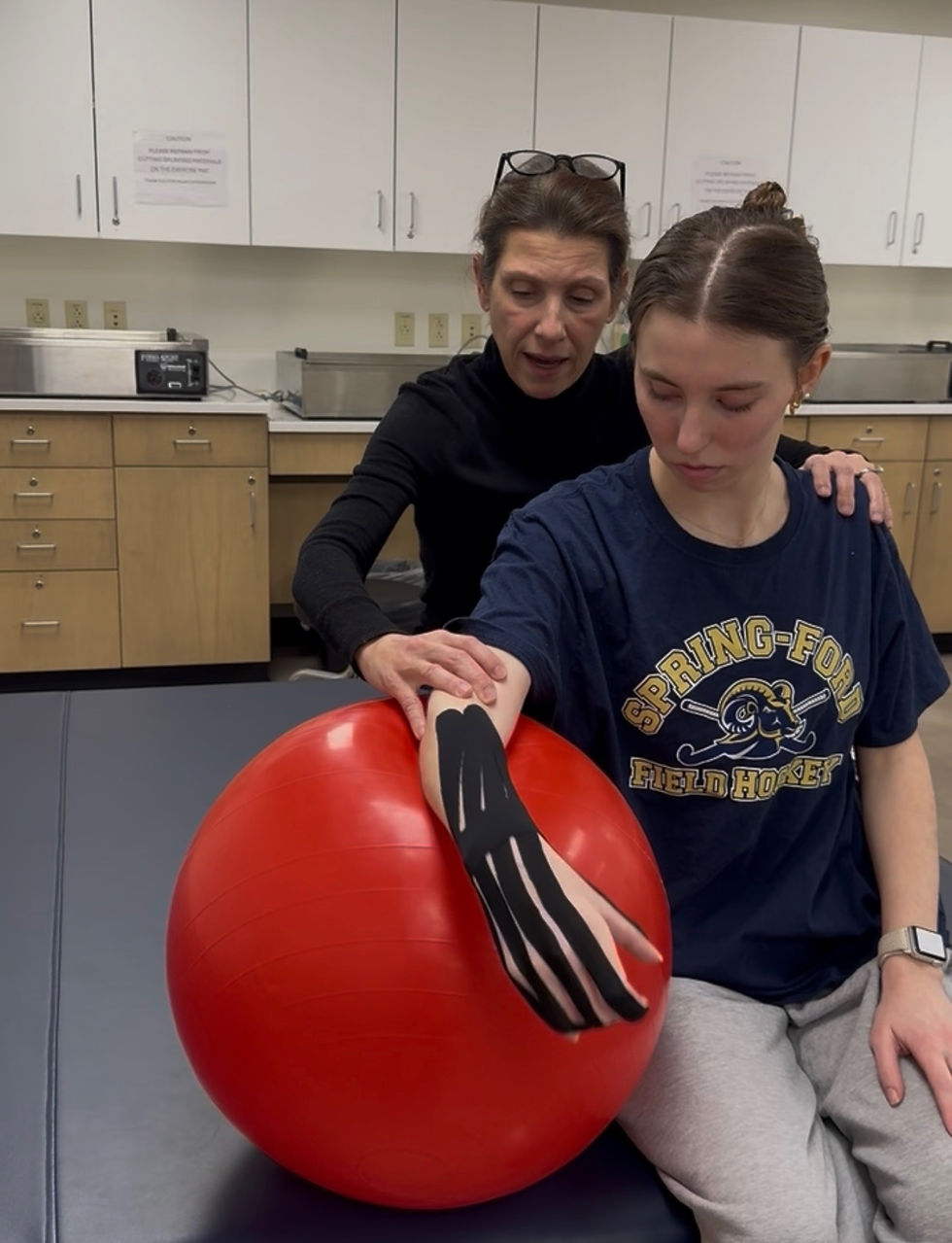
Leveraging advanced hand therapy expertise within neurologic upper-limb rehabilitation is not about privileging one framework over another. It is about applying equal expertise to the neural, mechanical, and sensory systems that jointly define recovery. Neuroplasticity is powerful, but it is expressed through structure, tissue, and sensation, each of which adapts over time. When orthopedic and sensory-motor considerations are addressed with equal rigor, recovery potential is preserved and secondary sequelae are mitigated. Ignoring any of these elements limits what recovery can ultimately become.
Advanced hand therapy expertise can create an effective bridge between top-down motor learning and bottom-up peripheral constraints, maintaining equal emphasis on both to support neuroplastic change and reduce secondary sequelae that otherwise cap functional performance.

